Travel payment guides
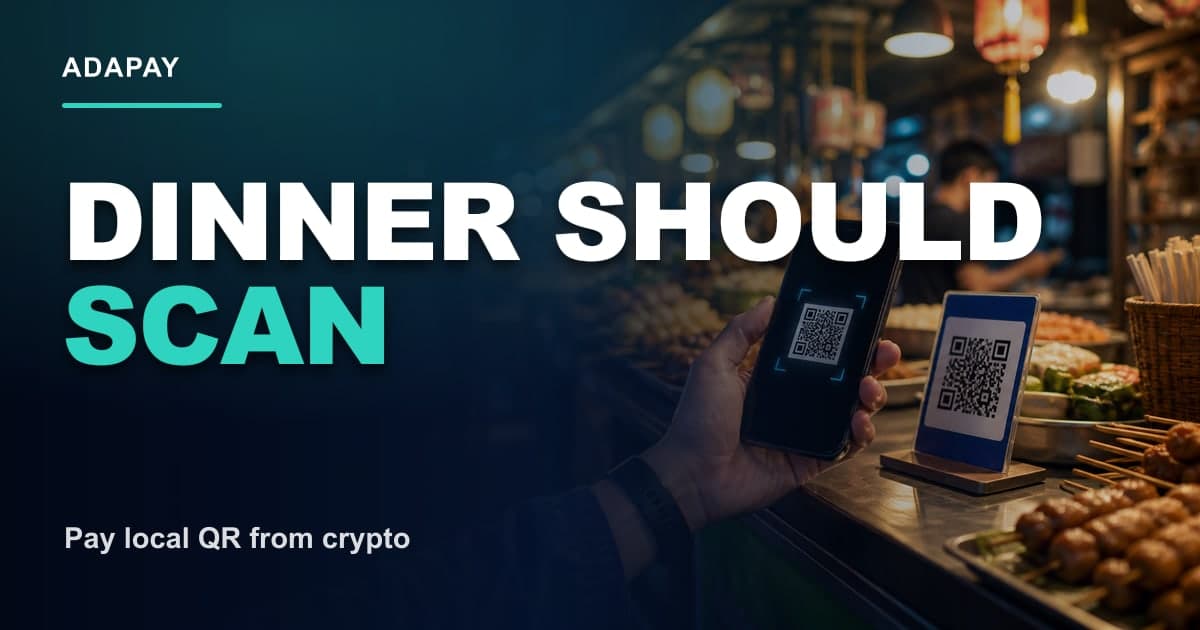
Eating through Vietnam night markets without payment stress
Plan a Vietnam night-market food crawl with realistic VND budgets, VietQR coverage, cash backup, and ADAPAY-ready payment habits.






Summarize content with
Open this guide in your preferred assistant and keep the payment decisions close.
 ChatGPT
 Perplexity
 Grok
Grok Gemini
What this guide solves
Vietnam’s best food often appears after dark: plastic stools, charcoal smoke, seafood trays, sugarcane presses, and QR codes taped to the side of a cart. For travelers, the hard part is not finding something good to eat. The hard part is knowing how much cash to carry, when QR will work, and how to avoid slowing down a busy stall while you sort out payment.
This ADAPAY guide covers the night-market cities most travelers actually visit: Hanoi, Hội An, Đà Nẵng, and Ho Chi Minh City. It also gives a payment plan for foreigners who do not have a Vietnamese bank account but still want to behave like a local payer when a stall points at VietQR.
Quick answer
For a proper Vietnam night-market crawl, budget about 150,000 to 250,000 VND for a light-to-medium food run and closer to 300,000 to 400,000 VND if seafood or drinks are part of the plan. In major cities, QR coverage can be strong enough that most purchases are scannable. Keep 200,000 to 300,000 VND in small cash as backup for the smallest vendors, parking, fruit baskets, or stalls without printed codes.
The best payment stack is simple: arrive with small notes, keep your phone charged, confirm the amount before scanning, and use ADAPAY when you need a local QR-style payment from a crypto-funded balance. Cards are rarely the right tool at a street-food stall.
Hanoi: food is off the main lane
Hanoi’s weekend night market runs through the Old Quarter, especially around Hàng Đào. The souvenir stalls are easy to find, but the better food is usually on the side streets around Hàng Buồm, Tạ Hiện, and the smaller lanes nearby. Look for bún chả, bánh tráng nướng, cháo sườn, phở cuốn, roasted chestnuts, and late drinks after the main dinner rush.
Go after 8 PM if you want the market fully awake. A satisfying crawl can be four or five small orders plus a bia hơi stop, which usually lands in the 150,000 to 250,000 VND range if you are grazing rather than sitting down for a full seafood meal.
Hanoi vendors increasingly use VietQR or bank transfer QR codes, even when the setup is just a laminated code attached to a cart. The friction for foreigners is that local banking apps handle the payment cleanly, while many visitors do not have those apps. That is the exact moment where an ADAPAY-style route is useful: the merchant stays on the local rail, and you avoid turning dinner into an ATM detour.
Hội An: touristy, still worth eating
Hội An’s night market near Nguyễn Hoàng Street is tourist-heavy, but the food section deserves a real stop. The market opens daily, and the early evening window around 5:30 PM can be easier before the riverside gets crowded. Start with cao lầu, white rose dumplings, mì quảng, bánh mì, and cơm gà.
Food prices vary by stall and season, but small dishes can still sit around the 35,000 to 70,000 VND zone. The town is used to foreigners, so vendors often understand the rhythm: order, confirm price, scan, show screen, move on. QR can be common at the more organized stalls, while very small sellers may still prefer cash.
Do not let the souvenir atmosphere fool you into paying casually. Confirm the amount in VND before scanning. If a stall quotes in USD, ask for the dong price. Local QR payments should be priced in local currency.
Đà Nẵng: seafood and river walks
Đà Nẵng is underrated for night eating. Sơn Trà Night Market near Dragon Bridge is the obvious stop for seafood: grilled squid, steamed clams, prawns, shellfish, rice, and beer. A fuller seafood table can land around 300,000 VND or more depending on weight and order size, so this is where confirming price before cooking matters.
Bạch Đằng pedestrian street along the Hàn River adds a lighter walking-and-snacking route, with bánh mì, grilled corn, coconut ice cream, bánh xèo, and small bites that work well after the beach. QR payment is common at organized stalls, especially around the busier evening areas, but you should still carry small cash for carts and quick snacks.
For groups, one person scanning the whole table is usually easier than splitting every dish. Settle up with friends afterward. The vendor cares that the total lands cleanly.
Ho Chi Minh City: night markets are local life
Saigon is less about one official night market and more about neighborhoods that eat late. Hồ Thị Kỷ is a standout: a flower market by day with dense food lanes after dark. Expect snails, bò nướng lá lốt, bánh tráng trộn, grilled skewers, sugarcane juice, and a lot of movement. Bến Thành is easier for first-timers, but District 4, District 10, and Gò Vấp can feel more local and often better value.
QR coverage in central Ho Chi Minh City is among the strongest in Vietnam. Many small food stalls display a code, and busy vendors often prefer scanning because it avoids handling notes while serving food. The smallest informal sellers may still be cash-only, especially if they are working from a basket, cooler, or single pot rather than a fixed stall.
If you are new to Vietnamese food, start with one easy dish and one adventurous dish. Cơm tấm, hủ tiếu, bánh mì, and bò nướng lá lốt are easy gateways. Snails are more fun when you go with someone who knows what to order, but they are part of the point of eating late in Saigon.
QR coverage by market type
In major cities such as Hanoi, Ho Chi Minh City, and Đà Nẵng, many organized night-market stalls can take QR payments. A practical working assumption is that most fixed food stalls in busy city zones will have a code, while some informal sellers will not.
In smaller tourist towns such as Hội An, Huế, or Nha Trang, QR can still be common but less universal. At rural markets, floating markets, fruit stops, or very early-morning food runs, cash becomes more important. Keep cash in small denominations so you are not asking a vendor to change a 500,000 VND note for a 20,000 VND snack.
The pattern is not random. The more fixed and organized the stall, the more likely a QR code appears. The more mobile and informal the seller, the more likely cash wins.
What to eat first
Use this as a starter map, not a rulebook.
| City | Good first orders | Payment note |
|---|---|---|
| Hanoi | Bún chả, bánh tráng nướng, cháo sườn, phở cuốn | QR is common around fixed stalls; keep cash for tiny carts. |
| Hội An | Cao lầu, white rose dumplings, mì quảng, cơm gà | Confirm VND price before scanning in tourist-heavy lanes. |
| Đà Nẵng | Seafood, bánh xèo, mì quảng, grilled corn | Check seafood weight and final price before cooking. |
| Ho Chi Minh City | Ốc, bò nướng lá lốt, bánh tráng trộn, hủ tiếu, cơm tấm | QR coverage is strong, but tiny informal sellers may be cash-only. |
Bring wet wipes, keep your phone charged, and do not over-order at the first stall. Vietnam night markets reward grazing. The best meal is usually a sequence of small decisions.
Payment habits that keep the line moving
- Ask or point to the dish, then confirm the total in VND.
- Scan only after the amount is clear.
- Show the confirmation screen without making the vendor hunt for it.
- Keep 200,000 to 300,000 VND in small notes for cash-only moments.
- Avoid paying food stalls with large notes unless the order is large.
- Do not rely on an international card for street-food stalls.
- If you use ADAPAY, prepare the balance before the evening starts.
The goal is not to make payment a performance. The goal is to make it disappear into the rhythm of ordering food.
Final take
Vietnam’s night markets are one of the best reasons to travel the country slowly. The food is varied, prices are still approachable, and QR payment has made many stalls easier for local customers. Foreigners just need a bridge into that local payment behavior.
Carry a small cash buffer, use QR where it is available, and keep cards for hotels or larger merchants. With ADAPAY ready before dinner, a crypto-funded traveler can spend less time managing money and more time deciding whether the next stop is noodles, seafood, or sugarcane juice.
Informational content only
This resource is general information, not financial, legal, tax, or investment advice. Local payment access, coverage, fees, and eligibility can change; verify terms with the relevant provider before relying on any route. ADAPAY's public financial service is not live.
Sources
These public references provide context for this guide and may be updated by the relevant organizations.