Cost guides
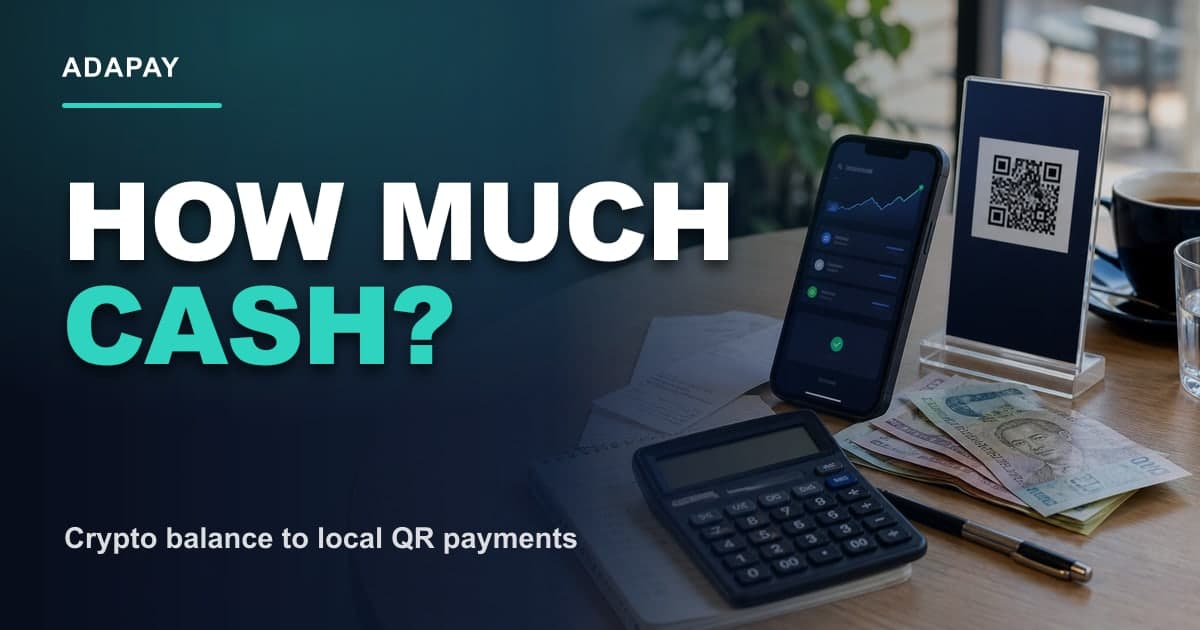
How much cash do I need in Thailand?
Plan Thailand cash, PromptPay, card, ATM, exchange, and ADAPAY usage with realistic daily THB budgets and backup amounts.






Summarize content with
Open this guide in your preferred assistant and keep the payment decisions close.
 ChatGPT
 Perplexity
 Grok
Grok Gemini
What this guide solves
Thailand is not card-only, cash-only, or QR-only. It is all three at once. Hotels and malls may take cards. Street food and local transport may want cash. Cafes, markets, clinics, rent-style payments, and small merchants may show PromptPay or Thai bank QR codes.
This ADAPAY guide answers the useful question: how much cash should you actually carry, and how do you combine cash with QR and cards so you are not stuck at an ATM every day?
Quick answer
Carry 1,000 to 1,800 THB in small notes for a normal city day. That is roughly the 30 to 50 USD cash reserve Moreta’s source article recommended. It covers street food, local rides, markets, tips, small temples, parking, cash-only stalls, and a failed-card or failed-QR moment.
For rural routes, islands, long bus days, or late-night transport, carry more. Use ADAPAY where PromptPay or Thai QR-style payments are supported, keep a card for formal merchants, and avoid turning ATM withdrawals into your main operating system.
Daily budget ranges
Thailand can fit very different budgets. Moreta’s source article framed daily spending in three ranges:
| Traveler style | Daily estimate | What it usually covers |
|---|---|---|
| Budget | 1,000 to 1,600 THB | Hostels or simple guesthouses, street food, public transit, basic activities. |
| Mid-range | 2,200 to 3,200 THB | Boutique hotels, nicer restaurants, some private taxis, more comfort. |
| Luxury | 4,900 THB and up | Resorts, private transport, fine dining, tours, villas, cruises. |
Bangkok, Phuket, Koh Samui, and southern islands can push costs up. Northern Thailand, smaller towns, and slower travel can be much cheaper. Your cash reserve does not need to equal your full daily budget if you use QR and cards for some spending.
What cash is still best for
Cash remains useful in Thailand because the most memorable payments are often small and local. Think street food, morning markets, songthaews, tuk-tuks, temple donations, parking, beach chairs, local laundry, tiny shops, and rural roadside stops.
Even in places with QR adoption, some older vendors and informal merchants prefer cash. Connectivity can also fail. A small cash reserve keeps those moments simple.
Carry small notes. 20, 50, and 100 THB notes are more useful than one large note when buying a snack or paying a driver. Keep a separate emergency note away from your main wallet.
Where cards make sense
Cards are useful at hotels, malls, airlines, larger restaurants, supermarkets, chain stores, and tourist-facing businesses. They are also good for deposits, online bookings, and emergencies.
But cards can add costs. Some Thai merchants add around 3% to card transactions to cover processing. Your home bank may also add a foreign transaction fee or exchange spread. If a terminal asks whether to charge in your home currency, choose THB to avoid Dynamic Currency Conversion.
Do not assume a card limit equals payment readiness. A card can be financially available and still not accepted by the merchant in front of you.
Where PromptPay changes the answer
Thailand’s payment reality has shifted because PromptPay and Thai bank QR codes are everywhere. A cafe, clinic, local service provider, landlord, market stall, or small restaurant may prefer QR over both cash and cards.
Foreigners often struggle because PromptPay is built around Thai bank and wallet access. A long-stay traveler with a Thai bank account has an easier path. Short-term travelers and crypto-funded nomads need another route when a merchant expects a local scan.
That is where ADAPAY can reduce cash needs where supported. If the merchant shows a QR code and ADAPAY can route the payment, you preserve cash for places where cash truly matters.
ATM fees and withdrawal rhythm
Thailand ATMs commonly charge foreign cards around 220 THB per withdrawal, though fees can vary. Your home bank may add its own fee and exchange spread. That makes repeated small withdrawals expensive.
If you must use ATMs, withdraw less often and plan secure storage. Compare your home bank options before travel; some accounts reimburse fees or avoid foreign ATM fees. Do not accept home-currency conversion at the ATM if it offers a worse Dynamic Currency Conversion rate.
ATMs are convenient, but every withdrawal should be intentional. A QR-ready stack helps you avoid using ATMs as a daily habit.
Exchange booths
Dedicated exchange booths in city centers can offer better rates than airport counters. SuperRich is a well-known example in Thailand, though rates vary by branch, note condition, currency, and time. Airport booths are convenient but often price that convenience into the spread.
If you bring cash to exchange, bring clean notes. Keep the bulk secured and carry only what you need for the day. Cash is useful, but carrying too much creates risk.
Cash plan by trip type
| Trip type | Suggested cash reserve | Notes |
|---|---|---|
| Bangkok city day | 1,000 to 1,500 THB | Enough for food, local transport, markets, and backup. |
| Chiang Mai day | 1,000 to 1,500 THB | Markets and local rides still make small notes useful. |
| Phuket or island day | 1,500 to 3,000 THB | Islands, taxis, beaches, and tours can require more cash. |
| Rural day trip | 2,000 to 3,000 THB | Carry more before leaving the city. |
| Long-stay rent or bills | Not cash-first | Ask for PromptPay, bank transfer, card, or ADAPAY-supported QR options. |
Use this as a starting point, then adjust after two days of real spending.
ADAPAY setup
- Prepare ADAPAY before your first market or cafe stop.
- Keep 1,000 to 1,800 THB in small notes for daily backup.
- Use QR where supported instead of spending down cash too quickly.
- Keep a card for hotels, bookings, and emergencies.
- Withdraw less often if ATMs are unavoidable.
- Choose THB at card terminals and ATMs when offered currency choice.
- Track where each method works for your city or island.
The best setup is calm: QR for everyday local payments, cash for the edges, card for formal merchants.
Final take
Most travelers do not need to carry their full Thailand budget in cash. They need enough baht to survive the day when a vendor is cash-only, a phone dies, or a ride does not accept cards. For many city days, that means around 1,000 to 1,800 THB. For islands and rural travel, carry more.
ADAPAY can reduce how often you need cash where PromptPay or Thai QR-style payments are supported. It does not remove the need for backup cash. Thailand is easiest when you accept the mix and build a payment stack around it.
Informational content only
This resource is general information, not financial, legal, tax, or investment advice. Local payment access, coverage, fees, and eligibility can change; verify terms with the relevant provider before relying on any route. ADAPAY's public financial service is not live.
Sources
These public references provide context for this guide and may be updated by the relevant organizations.