Country payment guides
How to pay in Malaysia as a foreigner
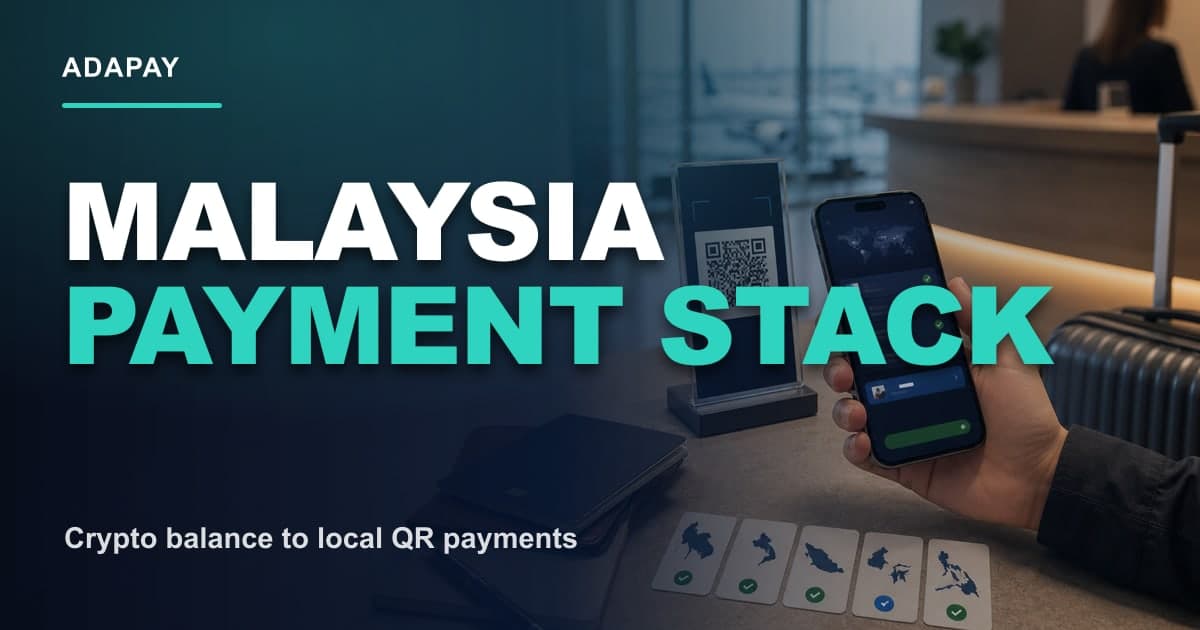
Use this Malaysia payment guide to plan DuitNow QR, Touch 'n Go, cards, ATMs, cash backup, and ADAPAY for local spending.







Summarize content with
Open this guide in your preferred assistant and keep the payment decisions close.
 ChatGPT
 Perplexity
 Grok
Grok Gemini
What this guide solves
Malaysia is not the cash-first country many older travel guides describe. Kuala Lumpur, George Town, Johor Bahru, Penang food courts, convenience stores, pharmacies, and many hawker stalls now sit inside a mature QR payment environment. At the same time, a foreign visitor can still hit a wall because the local apps often expect Malaysian bank access or local wallet eligibility.
This ADAPAY guide explains the real stack: DuitNow QR for local-style payments, Touch 'n Go for transit, Grab for rides, cards for formal merchants, ATMs only when needed, and enough ringgit to avoid awkward cash-only moments.
Quick answer
For Malaysia, arrive with three layers. Use cards for hotels, airlines, malls, larger restaurants, and bookings. Use a local QR-ready route for hawker stalls, small shops, markets, pharmacies, convenience stores, and daily purchases where DuitNow QR appears. Keep 50 to 100 MYR in small notes for transport gaps, cash-only stalls, tips you choose to give, and rural or island situations.
ADAPAY belongs in the QR layer. If your balance starts as crypto or a foreign source of funds, the goal is not to explain that to a vendor. The goal is to scan a Malaysian merchant QR, confirm the amount, and let the merchant receive ringgit in the local flow.
DuitNow QR is the rail to understand
DuitNow QR is Malaysia’s national QR standard. It operates under the country’s interoperable payment framework and is managed by Payments Network Malaysia, commonly known as PayNet. Instead of every bank and wallet needing a separate sticker, a merchant can show one QR code that participating bank and wallet apps understand.
That is why you see QR codes far beyond luxury malls. They appear at mamak restaurants, hawker centres, pasar malam stalls, kopitiams, pharmacies, convenience stores, independent shops, and some taxis. In Kuala Lumpur, George Town, and Johor Bahru, QR acceptance can feel normal rather than novel.
The catch is access. Local customers pay through Malaysian bank apps and wallets. Foreigners may not have the bank account, local phone setup, or wallet eligibility that makes DuitNow QR effortless. Plan for that gap before you are standing in front of a hot laksa stall with people waiting behind you.
Cash, cards, and QR compared
| Method | Best use | Watch-out |
|---|---|---|
| Cash | Small stalls, buses, ferries, rural stops, backup | Airport and hotel exchange rates can be poor; carrying too much is clumsy. |
| Cards | Hotels, malls, chains, flights, formal bookings | Foreign transaction fees and exchange spreads can add 2% to 3% or more. |
| DuitNow QR | Hawker stalls, cafes, shops, markets, daily spending | Local apps may require Malaysian bank or wallet access. |
| Touch 'n Go | KL rail, tolls, some transport and retail moments | Transit use does not replace full payment access everywhere. |
| ADAPAY route | QR-style daily payments from crypto-funded or foreign balances | Confirm supported rails and keep cash/card backups. |
None of these options should carry the whole trip. Malaysia is easiest when you use the right tool in the right place.
Where QR actually shows up
Street food is the most important category. Hawker centres around Kuala Lumpur, Penang, and George Town increasingly display DuitNow QR, even when the stall itself is small. Jalan Alor, kopitiams, mamak restaurants, and food courts are good places to expect QR, though not every vendor will have it.
Convenience stores and pharmacies are straightforward. 7-Eleven, myNEWS, Guardian, and similar chains commonly support cards and digital payments, making water, snacks, toiletries, and medicine easy. Petrol station shops and independent retailers often support QR too.
Markets and regional towns vary. Chow Kit in Kuala Lumpur, George Town boutiques, and urban night markets can be QR-friendly. Kota Kinabalu, Sabah, Sarawak, and smaller towns can still be patchier, especially around very small or mobile vendors. Keep cash for those edges.
Transport is mixed. Grab is strong in Malaysia if your app and card are already working. KL Monorail and MRT depend heavily on Touch 'n Go-style transit behavior. Buses, older taxis, ferry crossings, and small local transport can still need cash.
ATMs and currency exchange
Malaysia has plenty of ATMs, including networks around Maybank, CIMB, Hong Leong, and other banks. They are useful, but they should not be your whole operating system. Your home bank may charge a foreign ATM fee, the local ATM may charge a fee, and the exchange spread may not be obvious.
If an ATM or card terminal asks whether you want to be charged in your home currency, decline that conversion and choose MYR. This is Dynamic Currency Conversion. It often looks comforting because it shows a familiar currency, but the rate is usually worse than letting the card network or bank settle in ringgit.
Airport currency exchange and hotel desks are convenient but often expensive. City money changers can be better, especially in busy commercial areas, but you still need to compare rates and handle cash. The goal is to need them less often, not never.
How much cash to carry
For Kuala Lumpur, George Town, and Johor Bahru city days, 50 to 100 MYR in small notes is a sensible minimum. That covers a cash-only stall, small transport issue, market purchase, or payment app failure. If you are heading to islands, rural areas, smaller towns, or Borneo-side travel, carry more.
Avoid carrying only large notes. A vendor selling a 6 MYR bowl of congee or a 3 MYR drink may not want to break a 100 MYR note. Small notes keep small purchases friendly.
Malaysia is generally not a heavy tipping culture. Sit-down restaurants often include a service charge. You can round up or leave a small thank-you when service is excellent, but you do not need a pocket full of coins for constant tipping.
Setup before you land
- Confirm your main card works abroad and tell your bank you are traveling if needed.
- Add a backup card to Grab before your flight.
- Prepare an ADAPAY balance or QR-ready route before the first food stop.
- Carry 50 to 100 MYR in small notes for arrival and cash-only moments.
- Consider a Touch 'n Go card for transit-heavy Kuala Lumpur days.
- Download offline maps for Kuala Lumpur, Penang, or your first destination.
- At ATMs and terminals, choose MYR instead of home-currency conversion.
The first hour after landing is not the ideal time to learn Malaysia’s payment stack. Do the setup while your connection is stable and you are not hungry.
A practical day in Kuala Lumpur
Imagine a morning at Chow Kit. You buy congee from one stall, fruit from another, and sugarcane juice from a cart. Two vendors may show DuitNow QR. One may be cash-only. Later, Grab handles your ride, a pharmacy takes card or QR, and dinner at a mall is easy by card.
That is Malaysia in one day: modern, QR-heavy, card-friendly in formal places, and still cash-aware at the edges. The winning traveler is not the one who insists on one method. It is the one whose stack can adapt without paying bad exchange rates or holding up the line.
Final take
Malaysia’s payment system has moved faster than many visitors realize. DuitNow QR is embedded in daily commerce, while cards remain useful for formal businesses and Grab covers many rides. The main challenge for foreigners is not merchant acceptance; it is access to the local rail.
Use ADAPAY where a local QR payment is the better fit, keep cards for formal spending, and hold a modest MYR reserve. That stack lets you enjoy Malaysia’s food, transport, and city life without letting fees and payment friction quietly eat the trip budget.
Informational content only
This resource is general information, not financial, legal, tax, or investment advice. Local payment access, coverage, fees, and eligibility can change; verify terms with the relevant provider before relying on any route. ADAPAY's public financial service is not live.
Sources
These public references provide context for this guide and may be updated by the relevant organizations.