Event payment guides
Rio Carnival and Reveillon money guide for crypto travelers
Plan Rio Carnival and Reveillon spending with Pix expectations, cash backup, card limits, ATM risk, and a crypto-funded payment stack.









Summarize content with
Open this guide in your preferred assistant and keep the payment decisions close.
 ChatGPT
 Perplexity
 Grok
Grok Gemini
What this guide solves
Rio has two payment stress tests that look like parties from the outside: New Year's Eve on Copacabana and Carnival week across the city. The fireworks, blocos, costumes, street food, beach drinks, rides, tickets, and late-night logistics are the fun part. The hard part is making sure your money is in the form people around you actually accept.
This ADAPAY guide is for crypto holders, digital nomads, and foreign visitors who do not want to spend a Rio trip hunting for ATMs, retrying foreign cards, or opening a rushed P2P cash-out while a vendor is waiting. It turns the Rio event problem into a payment-stack problem: Pix awareness, small cash, card backup, phone battery, and a preplanned route from digital balance to local spending.
Quick answer
Treat Rio Carnival and Reveillon as QR-first, cash-light, crowd-heavy spending environments. Pix is the local rail to understand. Cards still matter for hotels, formal restaurants, ticket sites, and some rideshare flows, but they are not enough for beach vendors, bloco drinks, small food sellers, informal services, and the many moments where the seller expects an instant local payment.
Why Pix changes the Rio budget
Brazilian daily payments revolve around Pix, the instant transfer system run by the Central Bank of Brazil. In Rio, that means a vendor can sell beer, water, coconut water, snacks, costumes, or a taxi ride with a QR code instead of a card terminal. During Carnival, the person walking through a bloco crowd with a cooler is much more likely to show you a Pix code than to pull out an international card reader.
That is convenient for locals and awkward for visitors. Pix is built around Brazilian financial access, so a short-stay foreigner can understand the system without automatically being able to use it directly. This is the same gap ADAPAY users see in QR-first countries elsewhere: the merchant wants a local payment, while the traveler has money in a foreign card, a crypto wallet, a bank account abroad, or a currency the merchant does not want to handle.
The question is not "Do I have money?" The question is "Can I pay in the format the seller expects in the next thirty seconds?"
What Reveillon actually costs
The Copacabana fireworks are free. You can stand on the beach, wear white like everyone else, and watch the city do what Rio does best. The spending happens around the event.
Expect the budget to bend in four places:
- Beach kiosk meals and drinks can run roughly R$150-300 per person on the night itself.
- Rooftop parties and hotel events along the beachfront can range from hundreds of reais to several thousand reais per ticket.
- Walking vendors may sell beer, water, coconut water, and snacks for small amounts, but they may want Pix or cash.
- Rideshare prices can surge hard after midnight, and pickup points near the beach can become chaotic.
The metro is usually the saner plan for getting in and out of Copacabana. Load whatever transit access you need before the crowds arrive. Standing in a queue after midnight is not the moment to discover that your card, cash, or app setup is wrong.
What Carnival actually costs
Carnival has two different money modes.
The street blocos are free to join. Your spending is drinks, water, snacks, food, simple costume items, transport, and the occasional urgent purchase when the heat wins. A practical bloco budget can be around R$100-200 per day if you keep it casual, but this depends heavily on where you go, how long you stay out, and how much you buy from street vendors.
The Sambadrome is the planned splurge. Seats for parade nights can start in the hundreds of reais and climb into the thousands for premium spots. Buy early from official or trusted channels. Last-minute resale around major events is exactly where tired visitors make expensive mistakes.
A mid-range five-day Carnival trip with one Sambadrome night, normal meals, plenty of street drinks, and local transport can easily reach R$2,500-4,000 per person before accommodation. Lodging is its own problem: Rio rooms around Carnival and Reveillon can sell out months ahead and price like a scarce asset.
Why cash alone is a weak plan
Cash feels like the universal fallback until you actually need it in peak-season Rio.
ATMs can become unreliable around the neighborhoods everyone is visiting. Copacabana, Ipanema, and Lapa are exactly the places where demand spikes. Even when an ATM works, the total cost can be ugly once you stack local withdrawal fees, your home bank's fee, currency conversion, and markup.
There is also the crowd problem. Rio is a real city, Carnival crowds are dense, and carrying a large pile of reais through a bloco is not clever. Locals often keep money minimal, phone protected, and payment quick. You should do the same. A small amount of cash is useful; a large cash operating system is fragile.
The ADAPAY-style payment stack
This is the stack to build before the trip:
- Keep a main card for hotels, formal merchants, event sites, and emergency deposits.
- Carry R$100-150 in small notes for backup, tips, and rare cash-only moments.
- Prepare a local-payment route for QR or transfer requests before you reach the crowd.
- Keep stablecoin or crypto liquidity organized before the trip rather than improvising every cash-out.
- Make phone power part of the budget: a dead phone can mean a dead wallet, dead map, and dead rideshare plan.
- Screenshot your accommodation address, booking details, and any event tickets.
- Check the recipient name or merchant details before confirming any QR payment.
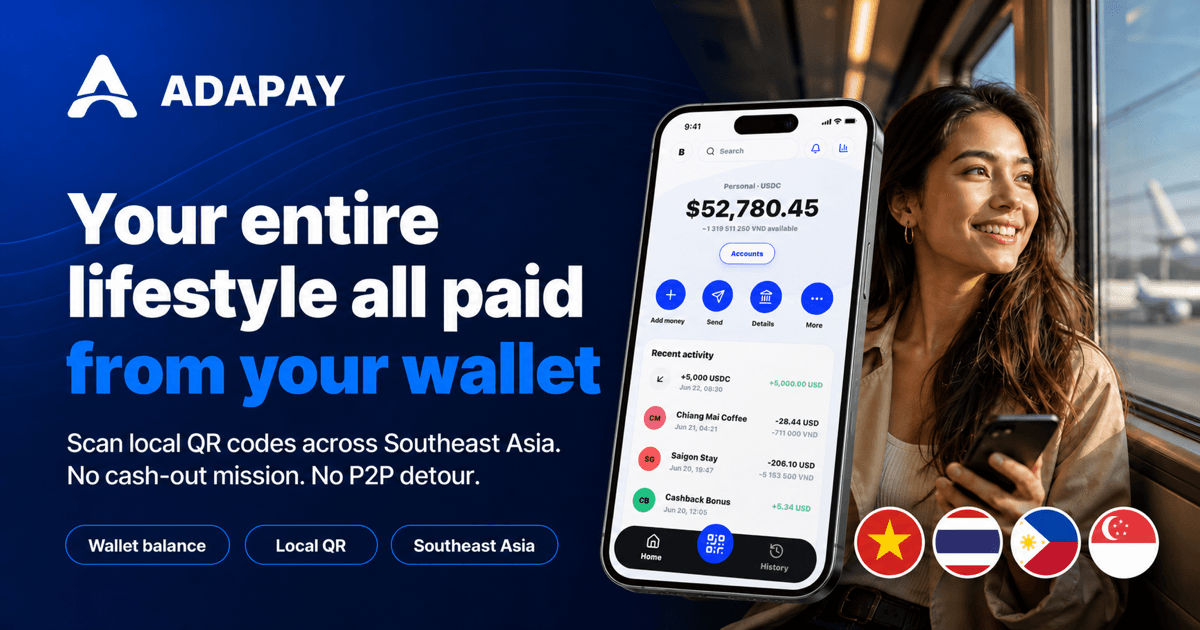
ADAPAY's brand position is simple here: crypto-funded travel only works when the final mile works. A stablecoin balance is useful only if it can become the payment format your real-world seller accepts. Sometimes that means a local QR route. Sometimes it means a prepared card. Sometimes it means small cash. The important part is deciding before the pressure moment.
Crowd-tested rules
Buy drinks and water before you are desperate. Heat and crowds change your decision-making fast.
Ask the price before accepting anything from a beach seller, costume vendor, parking helper, or informal service provider. A friendly "quanto custa?" can save more than a clever card.
Use a phone pouch or secure pocket. Your phone is not just a phone during Carnival; it is your map, payment device, ticket wallet, translator, camera, and ride home.
Do not keep every backup in one place. If your phone dies, your card fails, and your cash is in the same bag that gets lost, the payment stack has failed.
Final take
Rio Carnival and Reveillon are worth planning for because the payment system is part of the event. The city moves fast, vendors are mobile, prices jump, crowds are dense, and Pix shapes daily commerce.
The ADAPAY lesson is bigger than Brazil: do not arrive in a local-rail market with only foreign-card assumptions. Prepare cash, card, battery, and a QR-ready plan before you need them. Then spend the trip thinking about the party, not the payment.
Informational content only
This resource is general information, not financial, legal, tax, or investment advice. Local payment access, coverage, fees, and eligibility can change; verify terms with the relevant provider before relying on any route. ADAPAY's public financial service is not live.
Sources
These public references provide context for this guide and may be updated by the relevant organizations.