Country payment guides
Why Pix beats cards in Brazil for everyday payments
Learn why Pix often works better than cards in Brazil, where foreigners get blocked, and how ADAPAY users should plan payment access.








Summarize content with
Open this guide in your preferred assistant and keep the payment decisions close.
 ChatGPT
 Perplexity
 Grok
Grok Gemini
What this guide solves
Sooner or later in Brazil, a foreigner reaches for a card and the merchant points to a QR code. It can happen at a padaria, a beach kiosk, a lanchonete, a taxi window, a market stall, or a small tour desk. The word you hear is usually the same: Pix.
Pix is not just another local wallet. It is the payment rail that reshaped daily spending in Brazil. This guide explains why it beats cards so often, why foreigners still get blocked, and how ADAPAY users should prepare a practical stack.
Quick answer
Pix beats cards in Brazil because it is instant, familiar, merchant-friendly, and built into the country's banking system. Cards still matter, especially for hotels and formal merchants, but a foreign card is not enough for everyday Brazil.
Why Pix moved so fast
Pix launched in late 2020 under Brazil's central bank. Adoption moved quickly because the rail solved problems for both sides of the counter: users could send money instantly, and merchants could receive confirmation without waiting on card settlement.
The result is visible in ordinary life. A small coffee, a kilo restaurant bill, a beach chair rental, a market purchase, a rideshare workaround, a guesthouse deposit, or a late-night transfer can all be handled with Pix when both sides have access.
For visitors, this creates a strange split. The local payment culture feels almost cashless, but direct access to the main rail may still require Brazilian setup.
Why cards lose
Cards in Brazil are useful, but they are not frictionless.
Small merchants may prefer Pix because card processing can cost them a percentage of the sale, require a terminal, and delay settlement. Pix confirmation arrives fast, often on the merchant's phone before the customer has walked away.
Foreign cards can also fail in terminals, online checkouts, bus-ticket flows, ride apps, delivery apps, and any payment path that expects local card behavior. Brazil has its own card habits, installment flows, fraud checks, and issuer rules. A card that works at a hotel can still fail at a smaller counter or inside an app.
Fees add another layer. Foreign transaction fees, exchange spreads, and dynamic currency conversion can turn repeated card use into a quiet cost. If a terminal asks whether to charge in USD or BRL, choose BRL.
Cash is not a perfect backup either. ATM withdrawals in Brazil can carry local fees around R$25-30 before your own bank adds anything. Machines in tourist areas can have low limits, poor availability, and extra safety concerns.
The CPF problem
Pix was built for the Brazilian financial system. Direct use normally connects to a Brazilian account or regulated payment provider, and those paths often involve CPF, Brazil's taxpayer identification number.
That is why visitors can understand Pix perfectly and still be unable to use it directly. The QR code is easy. The local account behind the scan is the hard part.
For short trips, do not assume you can create a Brazilian payment setup on arrival. Prepare before the first ride, meal, or booking deposit.
What Pix changes day to day
Pix matters because it shows up in small moments that cards handle poorly:
- A padaria breakfast where the line moves faster for QR payments.
- A beach vendor who does not want to carry change or a terminal.
- A taxi or moto-taxi driver who wants instant confirmation.
- A feira stall where card acceptance is unreliable.
- A small hostel or tour operator asking for a deposit.
- A food counter or nightlife vendor where cash is inconvenient.
Multiply those moments across a week and Pix becomes more than a convenience. It becomes the difference between paying like a local and constantly improvising.
ADAPAY payment planning
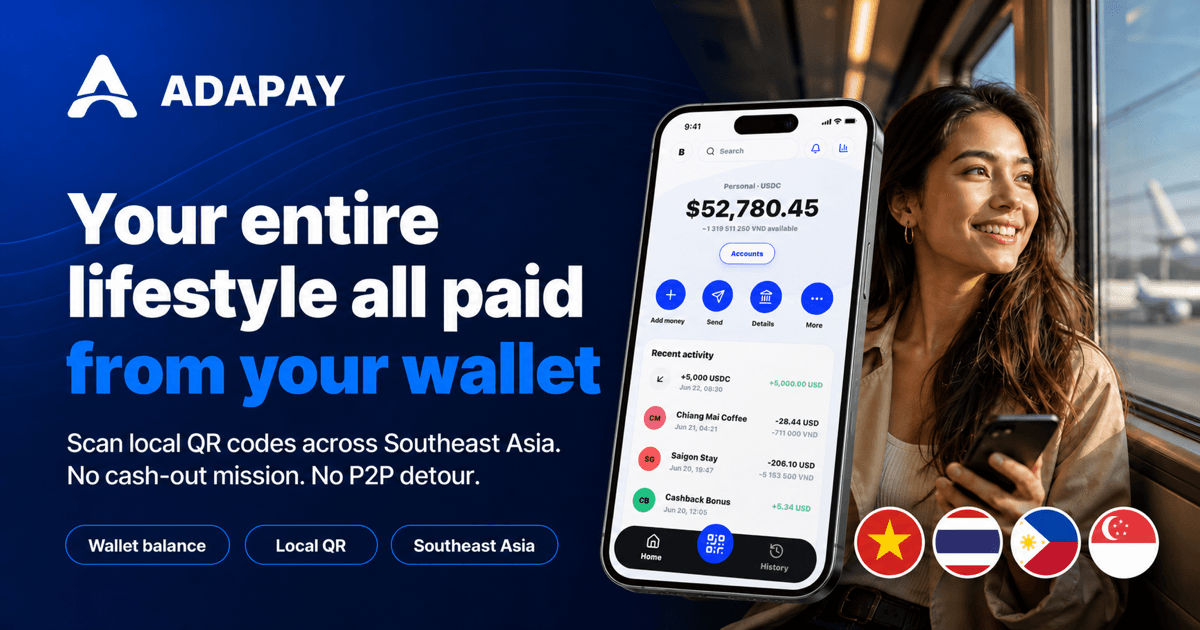
ADAPAY users should build a Brazil stack instead of relying on one card. Confirm current Brazil and Pix-related availability in the app before you travel, then keep backup layers.
A practical setup looks like this:
- Keep a foreign card for hotels, airlines, formal merchants, and deposits where it works.
- Keep some reais in small notes for rare cash-only moments and tips.
- Avoid repeated ATM runs when fixed fees make small withdrawals expensive.
- Use a Pix-ready route only after checking the recipient name, amount, and BRL value.
- Keep payment confirmations until the merchant, driver, or host confirms receipt.
- Test your setup before a high-pressure moment like an airport ride or event purchase.
Where a card is still useful
Do not throw cards away. In Brazil, cards remain useful at hotels, malls, supermarkets, airlines, larger restaurants, car rentals, and international platforms. They are also helpful as a backup when signal is poor or a QR flow is unavailable.
The mistake is treating cards as the whole plan. Brazil has moved far enough toward Pix that a card-only visitor can feel financially clumsy even with plenty of money.
Final take
Pix beats cards in Brazil because it fits the country: instant confirmation, low merchant friction, and a single rail almost everyone recognizes. For locals, that is normal. For foreigners, it is powerful but not always directly accessible.
The ADAPAY way to handle Brazil is simple: understand Pix, confirm your local-rail route, keep a card, keep a little cash, and avoid discovering the gap only after the merchant has already asked, "Pix?"
Informational content only
This resource is general information, not financial, legal, tax, or investment advice. Local payment access, coverage, fees, and eligibility can change; verify terms with the relevant provider before relying on any route. ADAPAY's public financial service is not live.
Sources
These public references provide context for this guide and may be updated by the relevant organizations.