Country payment guides
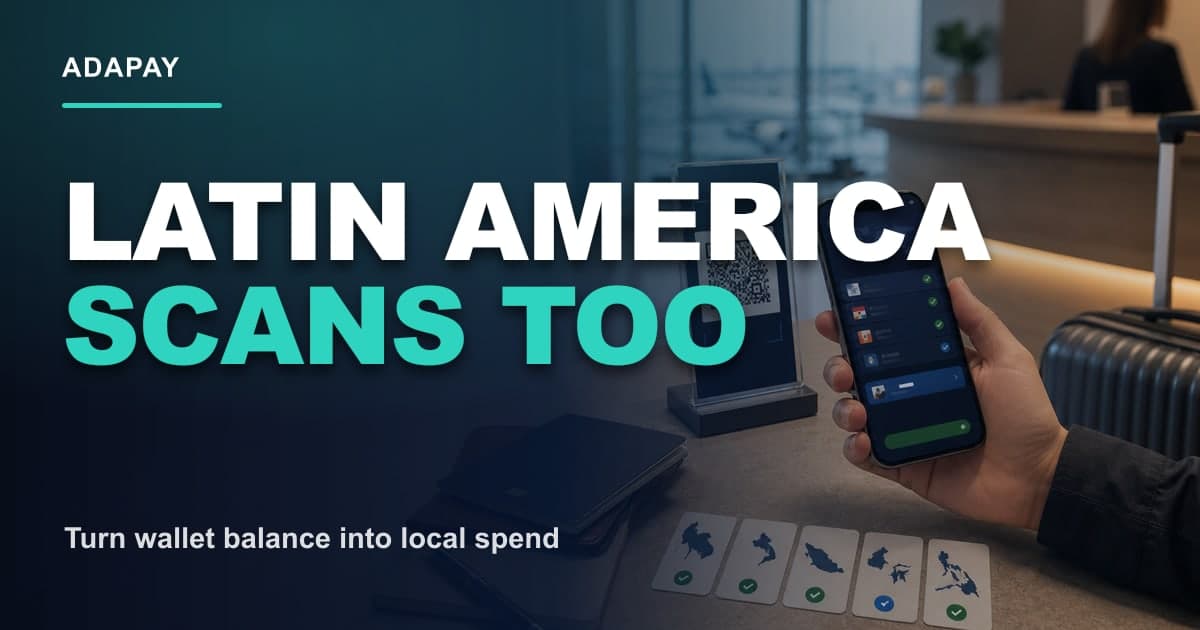
Latin America QR payments for foreign travelers
Compare Pix, MODO, Mercado Pago, Yape, Plin, BCB QR, cards, cash, and ADAPAY planning across Latin America.







Summarize content with
Open this guide in your preferred assistant and keep the payment decisions close.
 ChatGPT
 Perplexity
 Grok
Grok Gemini
What this guide solves
Latin America is not one payment market. Brazil, Argentina, Peru, Bolivia, Colombia, Mexico, and the rest of the region each have their own rails, wallets, banking rules, and merchant habits.
But for travelers, the pattern is familiar: locals often pay by QR or instant transfer, while foreigners arrive with cards, cash, and a wallet balance that still needs a local route.
Quick answer
Treat Latin America as a local-rail region, not a card-only region. In Brazil, learn Pix. In Argentina, recognize Mercado Pago, MODO, Ualá, Personal Pay, BNA+, and interoperable QR behavior. In Peru, learn Yape and Plin. In Bolivia, understand BCB QR and $imple. Then check which routes are currently supported in ADAPAY before you depend on them.
Brazil: Pix sets the pace
Brazil is the clearest example. Pix is run by the Central Bank of Brazil and has become normal for daily purchases, transfers, deposits, ride workarounds, local services, and small merchants.
The issue for visitors is CPF and Brazilian financial setup. Direct Pix use typically depends on a Brazilian account or eligible payment provider. That is why Brazil planning should include a confirmed Pix route, not only a foreign card.
Argentina: QR wallets and interoperable rails
Argentina's QR layer is wallet-heavy. Mercado Pago is highly visible, but MODO, Ualá, Personal Pay, Cuenta DNI, BNA+, and bank apps also matter. Transferencias 3.0 pushed the market toward interoperable QR behavior, so a single merchant code can often work across several local apps.
Visitors still face local identity and account barriers. Argentina also has a history of exchange-rate complexity, so foreign cards, ATM cash, and wallet routes should be compared carefully before larger spending.
Peru: Yape and Plin
Peru's daily QR habit is built around Yape and Plin. You may see these at markets, bodegas, juice stands, taxis, small restaurants, guesthouses, and tour operators.
The barrier is access. Traditional setup can require a Peruvian phone number, local bank relationship, DNI, or resident identity document. For travelers, the practical answer is a stack: card for formal merchants, soles for backup, and a confirmed local QR route when available.
Bolivia: BCB QR and $imple
Bolivia has been moving toward interoperable QR payments through central-bank-backed rails such as BCB QR and $imple. For foreigners, the same rule applies: understanding the rail is not the same as having direct access.
Carry cash for small merchants and remote areas, keep a card for formal places, and verify any app route before relying on QR at the merchant counter.
Colombia and the rest of the region
Colombia and other Latin American markets continue to evolve. Some countries remain more card-and-cash heavy. Others are moving quickly toward instant transfers and wallet QR. Do not assume one country's setup works across the region.
Before moving between countries, recheck ADAPAY support, currency, limits, and funding. A route that works in Brazil does not automatically mean the same rail exists in Peru or Argentina.
Where foreigners get stuck
The most common blockers are:
- CPF in Brazil, DNI in Argentina, RUC or local identity flows in Peru, and similar national IDs elsewhere.
- Local phone number requirements.
- Local bank account requirements.
- Foreign card declines in small shops and app flows.
- ATM fees, withdrawal limits, and poor exchange spreads.
- Dynamic currency conversion on card terminals.
- Rushed P2P cash-outs when a merchant is already waiting.
This is why a country-by-country setup matters. Latin America is QR-heavy in many places, but not uniform.
ADAPAY regional checklist
- Confirm ADAPAY support country by country before travel.
- Check which rail is supported: Pix, wallet QR, bank QR, or another local route.
- Prepare funding before arrival, while your internet and bank access are stable.
- Keep a card for hotels, airlines, and formal merchants.
- Keep local cash in small notes for rural areas, tips, transport, and failures.
- Choose local currency on card terminals when possible.
- Check merchant name, currency, and amount before confirming any QR payment.
Final take
Latin America is opening to QR and instant-transfer behavior, but each market has its own local identity rules and rail names. Brazil is not Peru. Argentina is not Bolivia. A card that works in one city may fail at the next small merchant.
ADAPAY users should think in payment formats: Pix in Brazil, QR wallets in Argentina, Yape or Plin in Peru, BCB QR or $imple in Bolivia, and cash or card where they still fit. The goal is not to make every merchant understand your wallet. The goal is to arrive with the local format ready.
Informational content only
This resource is general information, not financial, legal, tax, or investment advice. Local payment access, coverage, fees, and eligibility can change; verify terms with the relevant provider before relying on any route. ADAPAY's public financial service is not live.
Sources
These public references provide context for this guide and may be updated by the relevant organizations.